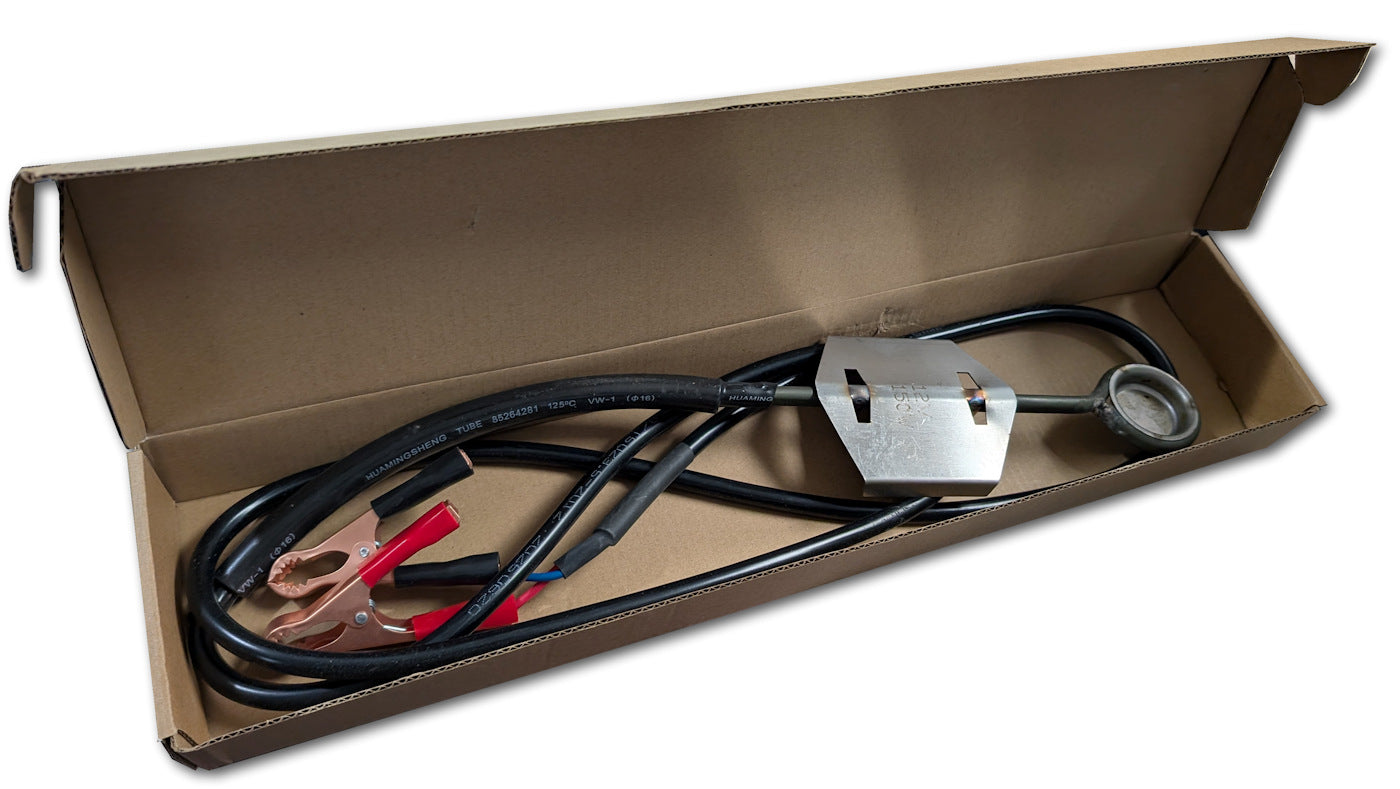
SKU:LUCIA-WAPERAND
- Competitive pricing
- Order Tracking
Share
For langstroth hives, this is an affordable time-proven way to treat your hives for mites. Simply pour in the appropriate amount of oxalic acid crystals, hook up to a car battery (or equivalent power source) and start treatment once it reaches temperature.
Done correctly, it’s very effective against phoretic mites, the ones riding on adult bees. It does not penetrate capped brood cells, which is why timing and repeat treatments matter so much.
Before You Start: Safety First
Oxalic acid vapor is dangerous to inhale.
You should always use:
- A properly fitted respirator with acid gas cartridges
- Eye protection
- Acid-resistant gloves
- Long sleeves
- Stand upwind of the hive
Even experienced beekeepers describe feeling lung irritation from accidental exposure.
The Correct Amount of Oxalic Acid
Here’s where things get spicy in the beekeeping world, because there are label directions and then there are field practices.
U.S. labeled dosage (Api-Bioxal)
The commonly cited legal label rate in the U.S. is:
- 1 gram per hive body / brood chamber per treatment
- Roughly 1/4 teaspoon ≈ 1 gram
Examples:
- Single deep: 1 gram
- Double deep: 2 grams
- Nuc: proportionally less
Some newer guidance and manufacturers simplify this to roughly 1 gram per colony/hive unit, regardless of box count.
Because labels and regional recommendations vary, it’s best to follow:
- Common sense safety (personal protection/mask)
- Your local regulations
- The label on the oxalic acid product you purchased
Best Timing for Treatment
Most effective: broodless periods
Oxalic acid vaporization works best when there is little or no capped brood:
- Late fall
- Early winter
- After a brood break
- During artificial queen caging
During broodless periods, efficacy can reach roughly 90 to 99% because nearly all mites are exposed on adult bees.
During active brood season
Since mites hide under capped brood, one treatment is usually not enough.
Common practice:
- Treat every 5 to 7 days
- For 3 to 5 treatments
This catches mites as they emerge with new bees.
Step-by-Step: Using the Vaporizer Wand
1. Prep the hive
- Close screened bottoms if possible
- Seal large openings with foam or cloth
- Reduce escaping vapor
2. Measure oxalic acid carefully
Use a scale if possible. Tiny white crystals, giant consequences.
3. Insert the wand
- Slide wand through entrance or drilled treatment port
- Keep bees away from the hot pan
4. Heat the vaporizer
Typical wand timing:
- About 2 to 3 minutes heating
- Then additional cooling/burnoff time
5. Keep hive sealed briefly
Most beekeepers leave the hive sealed:
- About 10 minutes after vaporization
This helps crystals settle throughout the colony.
6. Ventilate and move on
Remove seals and allow normal airflow again.
Best Practices That Make a Huge Difference
Treat before colonies collapse
Late summer and early fall are critical. Waiting until bees look sick often means the mites already won.
Don’t overdose
More acid does not automatically equal better control, and overdosing can stress or injure bees.
Keep your vaporizer clean
Oxalic acid residue builds up over time. Warm water and brushing are commonly recommended after cooling.
Rotate treatment methods
Many beekeepers alternate:
- Oxalic acid
- Formic acid
- Apivar
- Brood breaks
- Drone brood trapping
That helps avoid relying on a single strategy year after year.
A Simple Practical Schedule
Winter cleanup
- 1 treatment during broodless period
- Possibly a second 7 days later
Active season suppression
- 3 treatments
- Every 5 days
We Accept